
Tracht
Which Dirndl blouse suits which Dirndl?
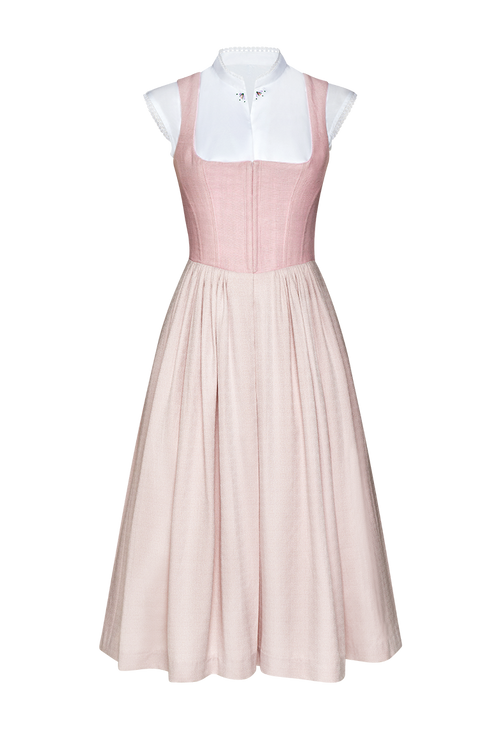
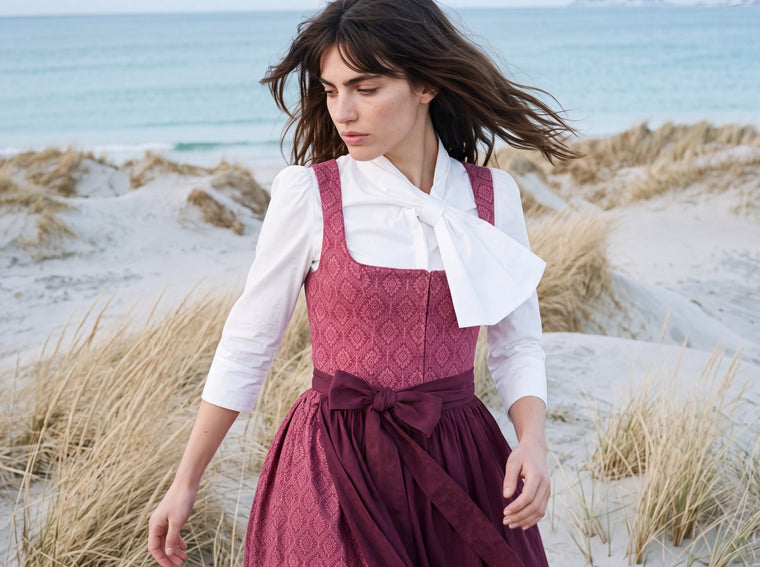
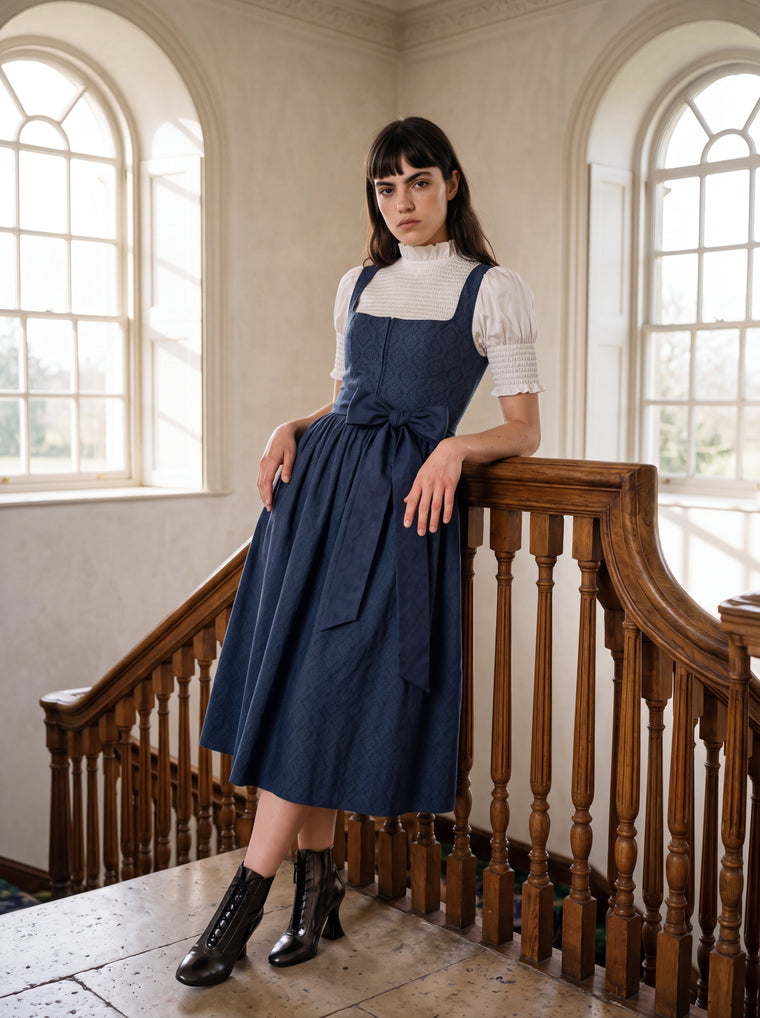
The right Dirndl blouse complements the neckline of the Dirndl, sits comfortably under the bodice (Leib) and agrees in colour and fabric with the whole Gwand. With a pure white blouse you are on especially safe ground: it can be combined with almost any Dirndl colour. For a pleasant feel on the skin, pure natural fabrics are to be recommended.
Whether plain, festive or playful: a different blouse can change the effect of a Dirndl noticeably. It is therefore worth trying various forms with the same model.
Which neckline suits which Dirndl?
The neckline of the blouse and that of the Dirndl should be considered together. What matters is how their lines work with one another on the body. The blouse should complement the neckline and form no disturbing folds under the bodice.
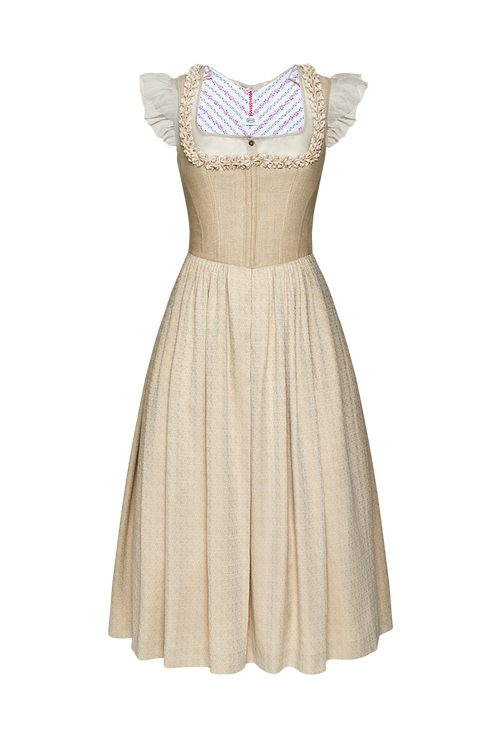
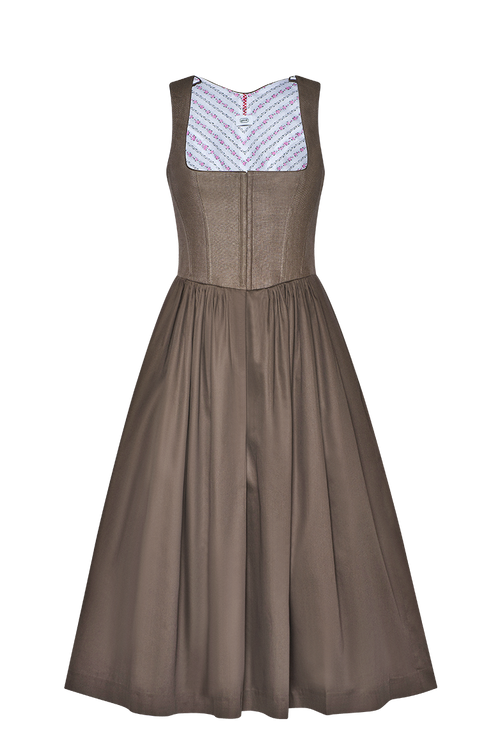
A more deeply cut Dirndl leaves room for different blouse forms: an open blouse emphasises the décolleté, a high-necked version gives the same Dirndl a more restrained character. With a high-necked Dirndl, on the other hand, it is above all the visible sleeves and a collar that may show that come to the fore.
| Neckline of the Dirndl | What to look for in the blouse |
|---|---|
| Balconette or straight neckline | Choose a blouse whose neckline takes up the clear line or deliberately complements it. Ruffles should have sufficient room. |
| Heart-shaped neckline | Choose a matching curved blouse line, or try a high-necked blouse as a version in its own right. |
| V-neckline | Make sure that the blouse neckline and the edge of the Dirndl run into one another harmoniously. |
| Round neckline | Round-cut blouses often look particularly coherent; high-necked forms can suit well too. |
| High-necked bodice | Choose a blouse that sits smoothly underneath and check the effect of the sleeves and collar. |
The table offers an orientation. You will always judge the combination best when wearing it – together with the Dirndl bra you intend to use.
What colour should a Dirndl blouse be?
Pure white is the most versatile choice. It brings freshness to the combination, stands out clearly from the Dirndl and suits light as well as strong and dark colours. Anyone wishing to wear one blouse with several Dirndls has a reliable starting point here.
But another colour is equally possible. What matters is that it harmonises with the Dirndl and the apron. Take up a tone from the fabric, for example, or choose a deliberately quiet complement.
Compare light shades in daylight where possible: pure white and creamy nuances appear different beside one another. The blouse should therefore always be looked at together with the whole Gwand.
Why are natural fabrics important for Dirndl blouses?
A Dirndl blouse is worn directly on the skin and under a close-fitting bodice. Alongside its appearance, what counts above all is how the fabric feels over several hours.
With blouses containing polyester, warmth and unpleasant odours can become more noticeable. How pleasant a blouse is to wear, however, also depends on the density of the weave, the construction and personal perception. Not every blended fabric has the same properties.
For Dirndl blouses Gössl uses pure natural fabrics exclusively. These include, for example, Anna Plochl satin, Normandy linen, silk organza and cotton lace. They open up different possibilities – from a smooth surface through a lively linen structure to fine transparency.
When buying, pay attention to the exact composition. Terms such as "satin" or "lace" alone say nothing about the fibres a blouse is made of.
Which fabric suits which occasion?
The choice of fabric influences the effect of a Dirndl blouse just as much as its cut. A plain blouse can quietly accompany an elaborately worked Dirndl; a finely designed blouse can give a restrained Dirndl a more festive character.
| Fabric at Gössl | Effect and combination idea |
|---|---|
| Anna Plochl satin | A smooth surface for a clear, well-groomed effect. Particularly beautiful when the weave and the workmanship are to speak for themselves. |
| Normandy linen | A natural, lively structure that suits summery and uncomplicated combinations well. |
| Silk organza | Fine transparency and a little body for a light, festive effect. |
| Cotton lace | An openwork structure that, depending on the pattern, can appear restrained or expressive. |
The apron belongs to this decision too. Consider the Dirndl, blouse and apron as a whole: where should the eye look first, and which elements accompany that focus?
Which Dirndl blouse suits a plain or a richly decorated Dirndl?
A plain Dirndl offers room for special blouse details. Fine lace, hand-worked ruffles or an elaborate sleeve design can give the combination a character of its own.
With a richly patterned or elaborately decorated Dirndl, a quieter blouse can bring the work on the bodice more strongly into its own. That does not mean that additional decoration is ruled out. It should be attuned in form and effect.
Try a plain and a more detailed blouse with the same Dirndl. Often it is only then that it becomes clear how versatilely a familiar Gwand can be worn.
Which sleeve length is the right one?
Short sleeves, three-quarter sleeves and long sleeves change the proportions and the character of the combination. The right choice depends on the occasion, the season and your personal taste.
Short sleeves can appear summery and light. Three-quarter sleeves leave the wrist free and can be combined in many ways. Long sleeves can create a particularly closed, festive line – with transparent fabric, and at the same time with great lightness.
When trying on, check whether the sleeves leave sufficient freedom of movement under the arms. Cuffs should sit pleasantly without cutting in.
How do you recognise a high-quality Dirndl blouse?
Besides pure natural fabrics, careful workmanship and the quality of the small details count. Look at the fastenings, seams and decoration close up.
Gössl Dirndl blouses are finished by hand with herringbone stitch and daisy. On buttoned models, genuine buttons of materials such as mother-of-pearl, horn or glass are used – no plastic buttons.
Depending on the model, fine handwork completes the design: smocking, for instance, carefully worked pintucks or hand-worked ruffles. These details give a blouse structure and character. A plain blouse can be just as high in quality as a richly decorated one.
During a consultation, ask to be shown which techniques are used on the model you have in mind. In this way the work behind the Gwand becomes visible.
How should a Dirndl blouse fit?
A Dirndl blouse should lie smoothly and comfortably under the bodice. It must not pull at the shoulders or under the arms. Its hem should sit securely without pressing or riding up when you move.
When trying on, pay attention to four points:
- Neckline: it lies as intended and does not slip when you move.
- Shoulders and sleeves: you can raise your arms and bring them forward comfortably.
- Under the bodice: no disturbing gathers of fabric or pressure points arise.
- Underwear: the Dirndl bra remains hidden under the chosen neckline.
With lace and transparent fabrics in particular, it is worth looking closely at the interplay with the underwear.
What do you wear on cooler days instead of a Dirndl blouse?
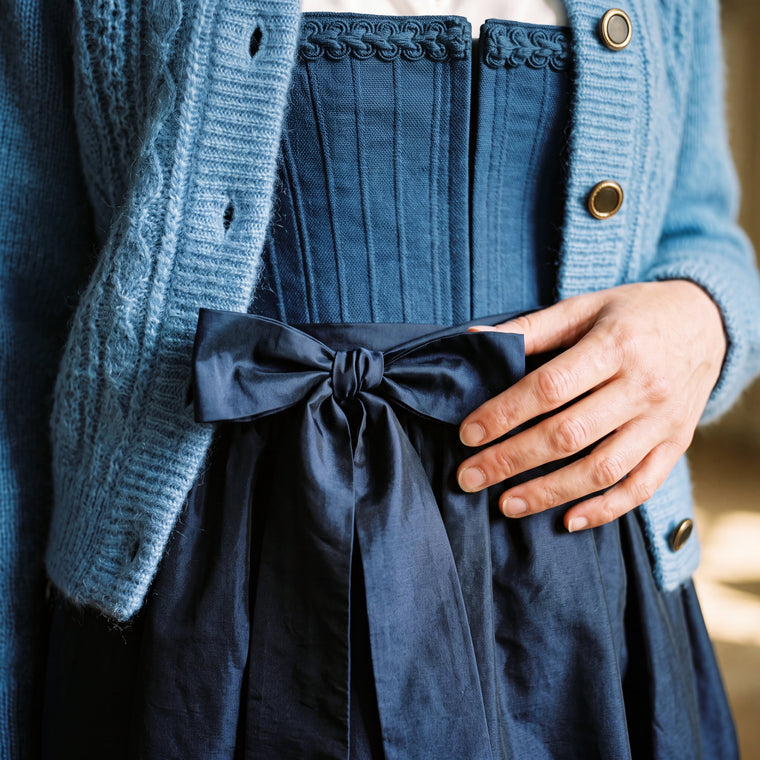
For cooler days Gössl has developed the Dirndl jumper in merino wool. It is worn in place of the Dirndl blouse and opens up a warming way of combining the Dirndl beyond the summer months as well.
The fine knit gives the Gwand a different character and fits particularly beautifully into autumn and winter combinations.
Try the Dirndl jumper on together with your Dirndl. Here too, the neckline, the shoulder area and the fit under the bodice should be attuned to one another.
Frequent questions about the Dirndl blouse
Does a white Dirndl blouse suit every Dirndl?
Pure white can be combined with almost any Dirndl colour and is therefore an especially safe choice. What remains decisive is the right neckline and the interplay with the apron.
Can a high-necked blouse be worn with a low-cut Dirndl?
Yes. A high-necked blouse can give a deeply cut Dirndl a more restrained character. It is important that it sits smoothly under the bodice and that its design comes into its own within the neckline.
Is a lace blouse always made of natural fibres?
No. Lace describes an openwork textile structure and says nothing in itself about the fibre composition. Pay attention to the label. For its Dirndl blouses Gössl uses pure natural fabrics, among them cotton lace.
Do you need a separate blouse for every Dirndl?
Not necessarily. A well-fitting pure white blouse can often be combined with several Dirndls, provided the neckline forms go together. Conversely, you can change the effect of a single Dirndl with different blouses.
What alternative is there to the Dirndl blouse in autumn and winter?
The Gössl Dirndl jumper in merino wool has been developed as a warming substitute for the blouse on cooler days. It adds a finely knitted version to the Dirndl.
Find the right Dirndl blouse at Gössl
Sometimes a different blouse is enough to discover your own Dirndl anew. Explore our Dirndl blouses and Dirndl jumpers in the online shop, or bring your Dirndl along to a Gössl store for a consultation.
Together we will find a combination in which the neckline, the fabric and the fit agree – and in which you feel at ease.
From those who can, for those who know.