
Tracht
How should a Dirndl fit? How to recognise the right fit
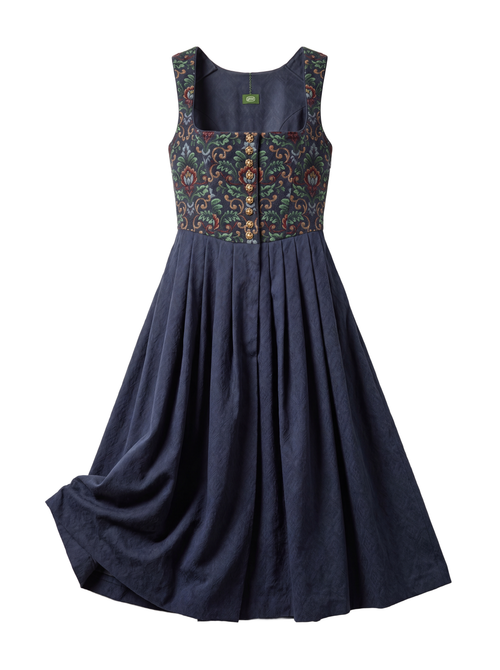
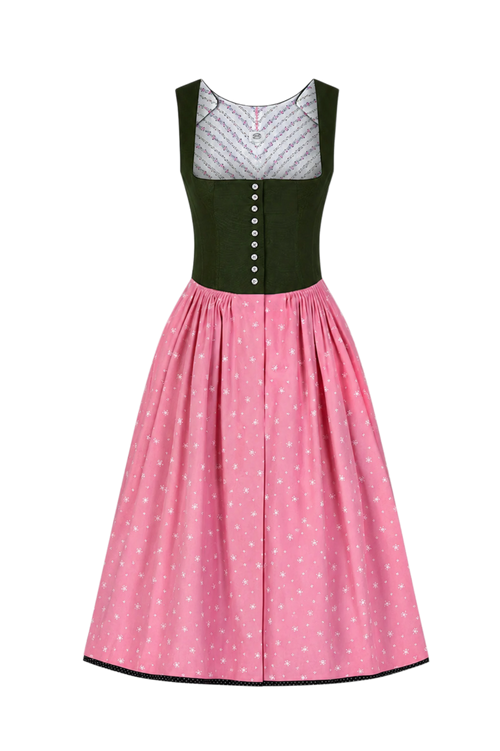
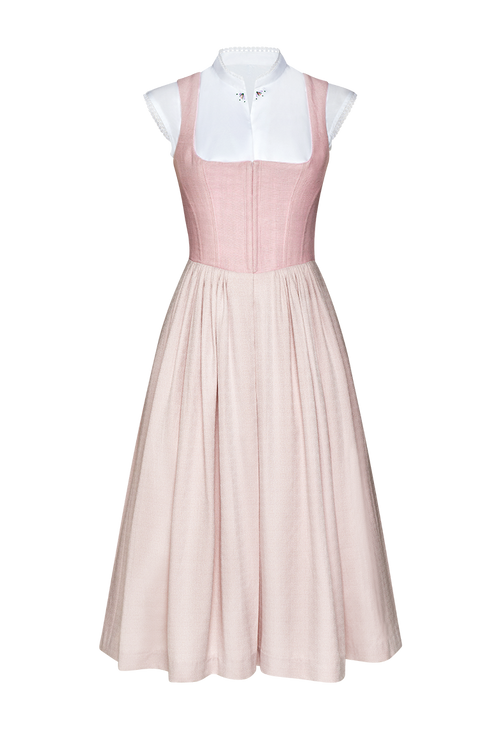
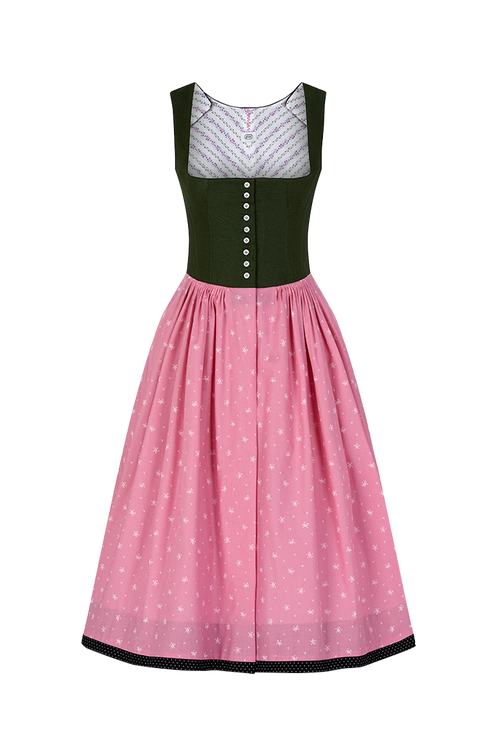
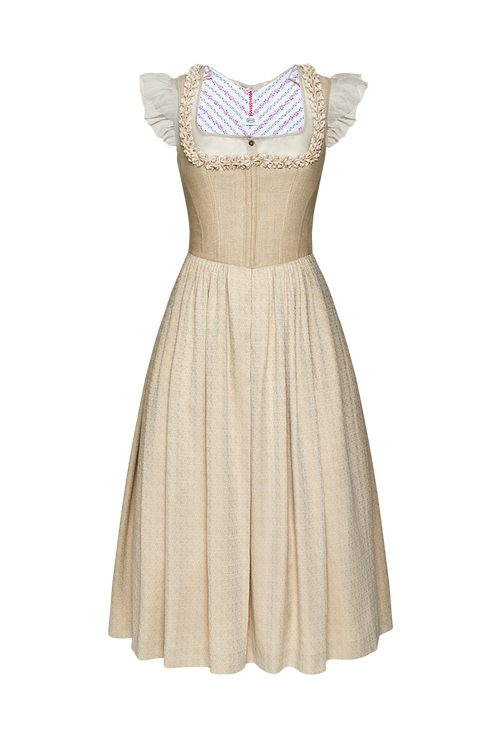
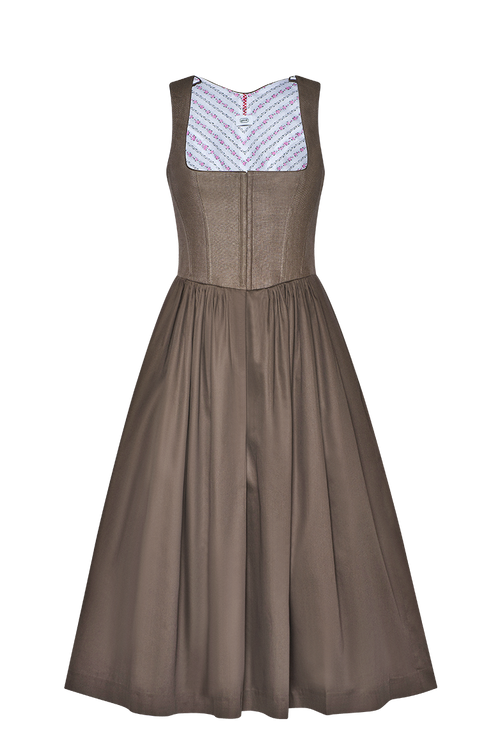
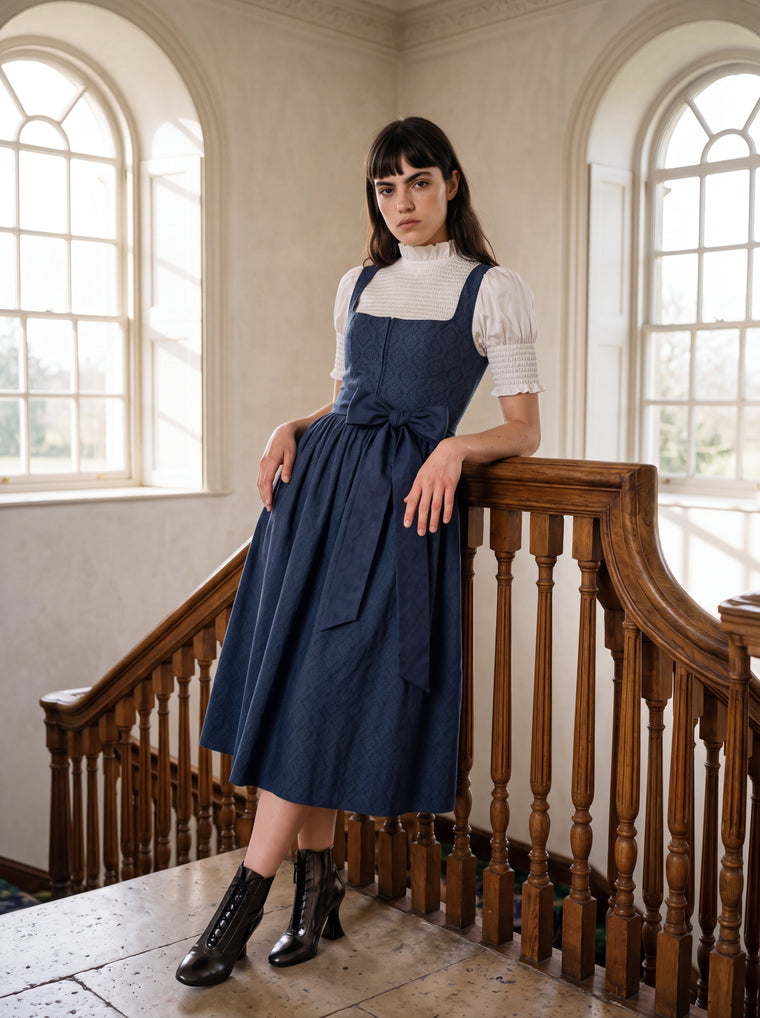
A Dirndl fits correctly when the bodice (Leib) – the upper part of the Dirndl – encloses the upper body close to the figure, the shoulders rest comfortably and the waist seam sits at the natural waist. The neckline should not stand away. At the same time you must be able to breathe, sit and move freely. The skirt falls from the waist downwards without pulling at the hips.
At Gössl, the possibility of adjustment is considered from the outset: seam allowances, alteration-friendly shoulders and additional length in the skirt hem allow the Dirndl to be matched to different body proportions. After all, every body is different.
How close-fitting may a Dirndl be?
The bodice may sit markedly closer to the body than a loose blouse or a generously cut dress. It gives the Dirndl its form and emphasises the waist. Close to the body does not mean, however, that it should press uncomfortably.
A good fit shows itself in a bodice that lies smoothly and a fastening that can be closed without strong pulling. Distinct horizontal drag folds, fastening edges drawn apart or pressure marks can indicate that the Dirndl is too tight.
At Gössl, boning worked into the bodice supports its form. It ensures that the bodice stays smooth even when you are seated, and gives the silhouette a clear, flattering line. At the same time it helps the Dirndl to keep its fit over the years.
The simplest test: breathe in deeply, sit down and move your arms. The Dirndl should sit comfortably throughout.
Where should the waist of a Dirndl sit?
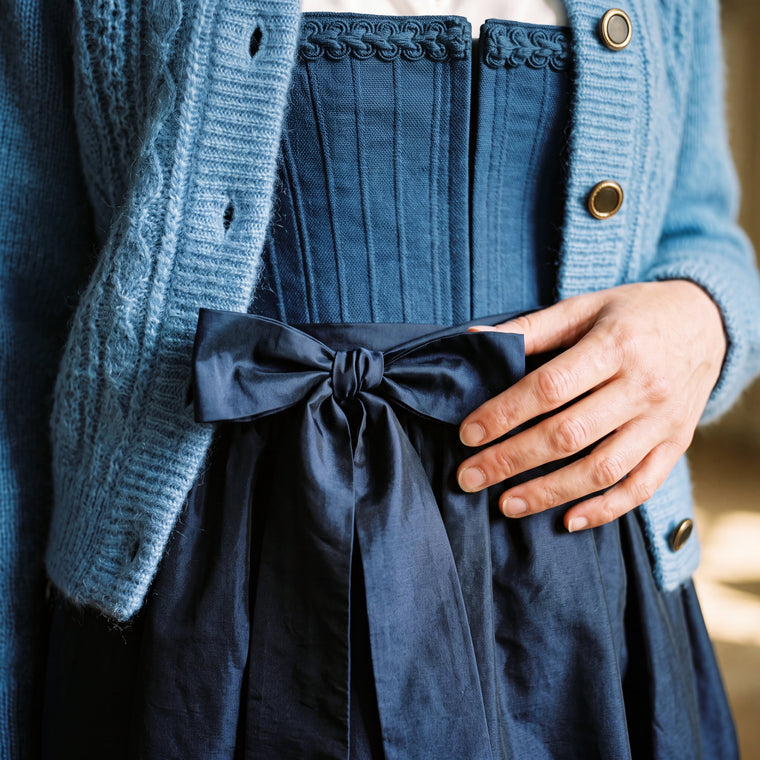
On a classically waisted Dirndl, the seam between bodice and skirt lies at the natural waist – that is, roughly at the narrowest point of the upper body. This is also where the apron is tied.
If the waist seam sits too high or too low, the length of the bodice may not suit your upper body. This cannot always be solved with a different standard size: besides the width, the proportions of the cut also determine the correct fit.
The apron ribbon should emphasise the waist and lie comfortably. A bodice that is too wide cannot be made to fit by tying it particularly tightly.
How should the neckline and shoulders lie?
The neckline should follow the line of the body and lie as smoothly as possible. It should neither cut in nor stand noticeably away. How much décolleté is visible depends on the shape of the neckline, the Dirndl blouse and your personal preference.
The shoulder section should rest comfortably without pressing or slipping outwards constantly. If the neckline stands away despite a suitable width, this may be due to the cut or the length of the shoulder section.
At Gössl the shoulders are deliberately designed to be alteration-friendly. They can be raised or lowered by a seamstress or tailor. In this way the fit of the bodice can be matched to the individual upper body.
If possible, try your Dirndl on with the blouse and the bra you intend to wear with it later. Both influence how the bodice sits and how the neckline appears.
How do you find the right Dirndl size?
Your usual standard size is a good starting point. What matters, however, are your measurements and the cut of the particular model.
For choosing a size, bust and waist measurements are especially helpful. Measure the bust at the fullest point of the chest and the waist at the natural waist. The tape measure should lie horizontally without cutting in. Then compare the values with the size guide.
A Dirndl should not, as a rule, be bought a size smaller. If you are between two sizes, or if bust and waist correspond to different sizes, personal advice helps. It can then be judged which cut suits you and whether a small alteration can improve the fit.
Can a Gössl Dirndl be made narrower or wider?
Yes. Every Gössl Dirndl has seam allowances that permit letting out by up to two standard sizes. A seamstress or tailor can therefore not only take the Dirndl in, but also let it out.
That is an essential part of our idea of long-lasting Gwand: when the body changes, a well-loved Dirndl should continue to give pleasure. The right fit is therefore not only a question at the time of purchase, but can also be adjusted anew later on.
Which adjustment makes sense for you is something our staff are glad to assess together with you at a fitting.
Which Dirndl length is right?
For a classic, versatile Dirndl we recommend a skirt length of at least 70 centimetres, up to ankle-length models. The skirt length is measured from the waist seam, not from the shoulder. How long the skirt appears on the body depends on your height and your proportions.
Gössl places particular emphasis on the skirt length of 80 centimetres. It can be combined for festive as well as for casual occasions: with a fine blouse and a matching apron the Dirndl accompanies special occasions, and with a simpler combination it suits a relaxed summer's day just as well.
When trying it on, consider the length with the shoes you intend to wear. What matters is that the proportions are right for you and that you feel comfortable walking and sitting.
Can the Dirndl skirt be shortened or lengthened?
A Gössl Dirndl skirt can be matched to the length of your legs. It can not only be shortened but, thanks to the additional hem allowance, also lengthened by a seamstress or tailor.
The choice of your favourite Dirndl therefore need not depend on the given skirt length alone. How much additional length can be gained is checked on the particular model.
The length of the apron should also be taken into account: the apron is usually worn slightly shorter than the Dirndl skirt, so that its hem remains visible.
How should the Dirndl skirt fall?
The skirt should fall from the waist in accordance with its cut. Pleats or gathers at the skirt attachment are part of the design of many Dirndls and are not a sign of the wrong size. At the hips the skirt should not pull, and it should offer sufficient freedom of movement when walking and sitting down.
For more volume we recommend a matching Gössl petticoat. It supports the flared form and gives the skirt additional fullness. It is best to try it on together with the Dirndl, so that you can judge the fall and the effect directly.
Which bra suits a Dirndl?
A Gössl Dirndl is best worn with a Dirndl bra that remains invisible beneath the chosen neckline. It should fit well and support the bust so that it fits harmoniously into the form of the bodice.
Make sure that neither cups nor straps show unintentionally at the neckline or under the Dirndl blouse. As the bra influences the fit, it is advisable to wear it for the fitting.
How do you recognise that a Dirndl does not fit correctly?
| Observation at the fitting | Possible cause and adjustment |
|---|---|
| The bodice presses when breathing or sitting. | Width may be lacking. At Gössl, seam allowances permit letting out by up to two standard sizes. |
| Distinct drag folds appear at the fastening. | The bust or waist area may be too tight and should be checked at a fitting. |
| The neckline stands away. | The width or the shoulder section does not fit. A targeted alteration can improve the fit. |
| The shoulder section slips or presses. | At Gössl the shoulders can be raised or lowered and matched to the upper body. |
| The waist seam sits too high or too low. | The length of the bodice may not suit your proportions. |
| The skirt appears too short or too long. | The Gössl Dirndl skirt can be shortened or, within the existing hem allowance, lengthened. |
A single characteristic does not yet say which alteration is necessary. At a personal fitting it can be seen which adjustment produces the desired fit.
The Dirndl fitting: what to look out for
Take a little time at the fitting and check these six points:
- Bodice: it lies close to the body and smoothly, without constricting.
- Waist: the waist seam sits at your natural waist.
- Neckline and shoulders: they lie comfortably and do not slip constantly.
- Movement: breathing in deeply, sitting and walking are comfortably possible.
- Skirt length: it suits your proportions and the shoes you intend to wear.
- Underneath: wear a suitable Dirndl bra and, if required, try a petticoat with it.
Frequently asked questions about Dirndl fit
Does a Dirndl become wider as it is worn?
How much a Dirndl gives depends on the fabric, the lining and the construction. When buying, do not rely on a bodice that is too tight becoming sufficiently wider later. A Gössl Dirndl can, thanks to its seam allowances, be let out where needed.
What to do if the Dirndl fits at the bust but is too wide at the waist?
In this case an adjustment at the waist may make sense. A smaller size could become too tight at the bust. Have it checked, therefore, whether the bodice can be worked accordingly narrower at the waist.
Why does a Gössl Dirndl have boning?
The boning worked into the bodice supports it, preserves its form and prevents it from collapsing and creasing when you are seated. It supports a flattering silhouette and helps the Dirndl to keep its fit for a long time.
Which skirt length is particularly versatile?
Gössl places particular emphasis on a skirt length of 80 centimetres. This length can be combined for festive as well as casual occasions. How it appears on you depends on your height and your proportions.
Should a petticoat be worn with a Dirndl?
A petticoat is advisable if you wish to give your Dirndl skirt more volume. Gössl offers matching petticoats for this. Whether you wear one depends on the desired silhouette and your personal taste.
Find your Dirndl at Gössl
A Dirndl should suit you – the first time you put it on and over many years. That is why we combine a form-giving construction with well-considered possibilities for alteration.
Discover our Dirndls in the online shop. On the model of your choice you can see in which Gössl store your size is available. Reserve it conveniently online and try it on at your leisure on site. Our staff are glad to advise you on the right size, on combinations and on your alteration wishes.
From those who can for those who know.