
Tracht
How should a Lederhose fit?
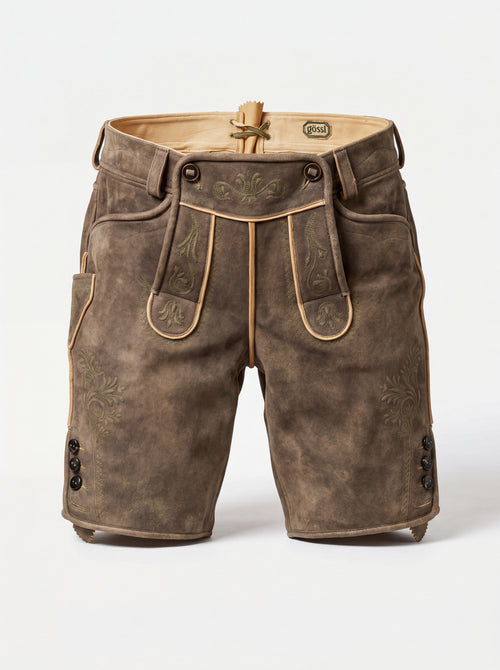
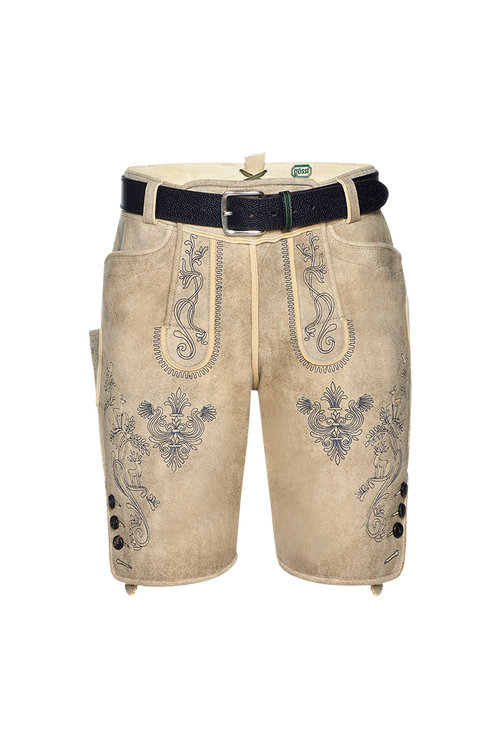
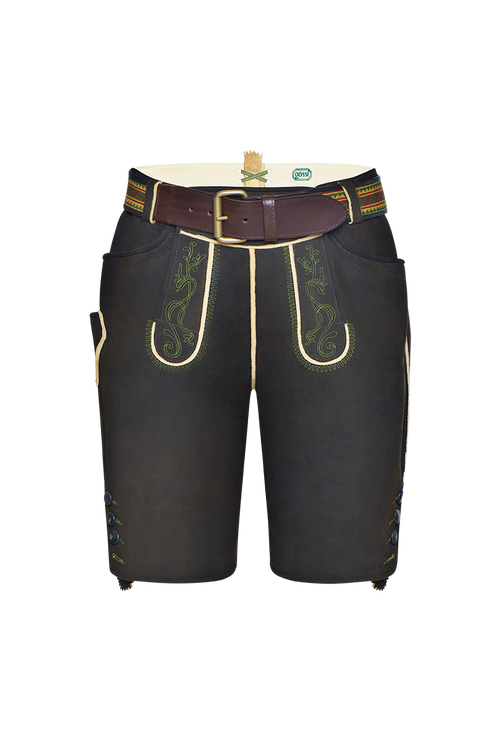
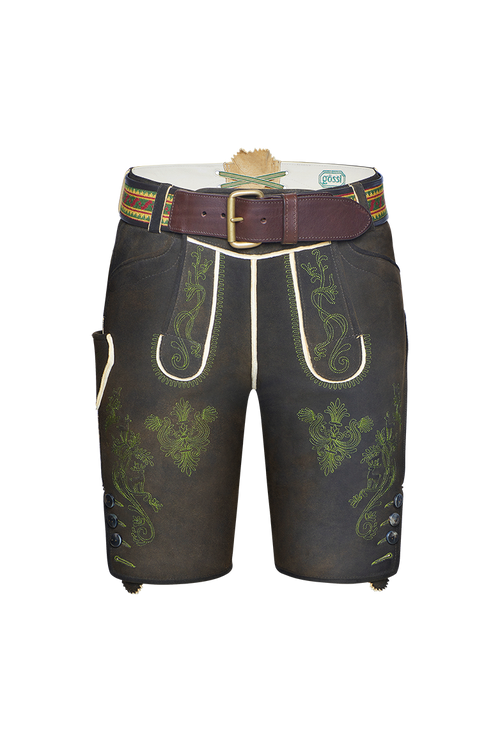
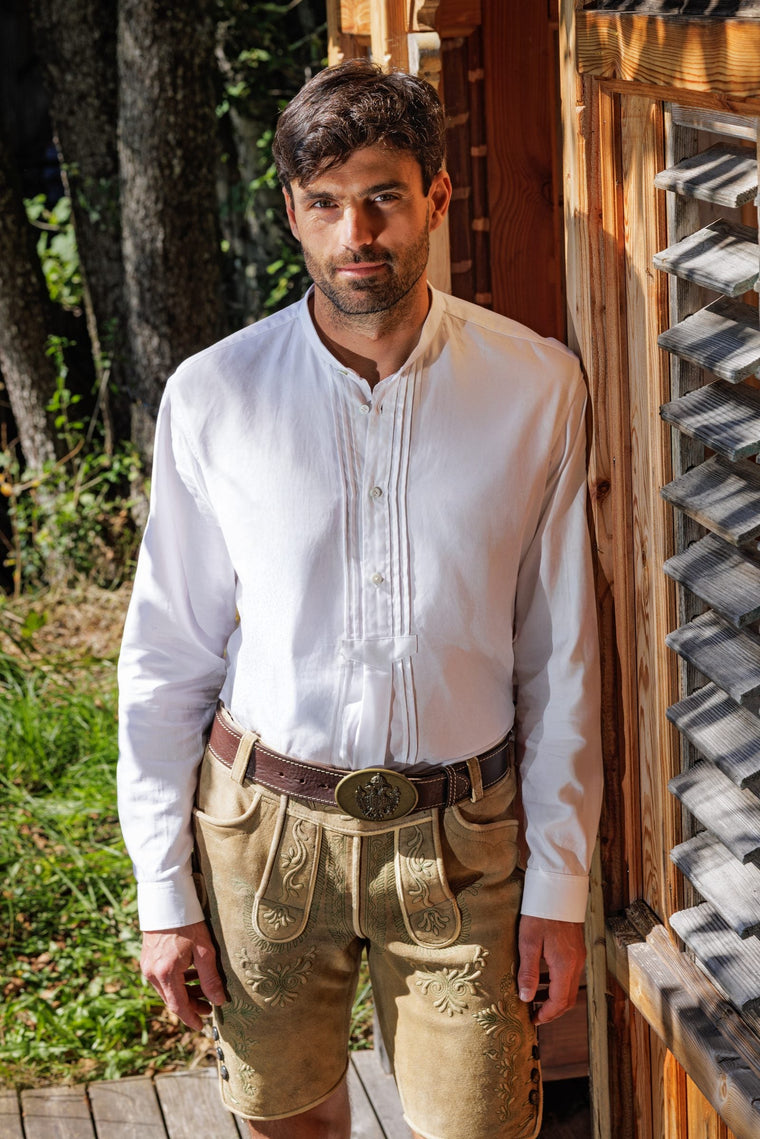
A new Lederhose should sit close and snug to the body, especially at the thighs. Leather gives with wear and adapts to the body. At Gössl we therefore recommend choosing the Lederhose as tight as possible at the beginning – yet so that you can close it, breathe normally and move without pain.
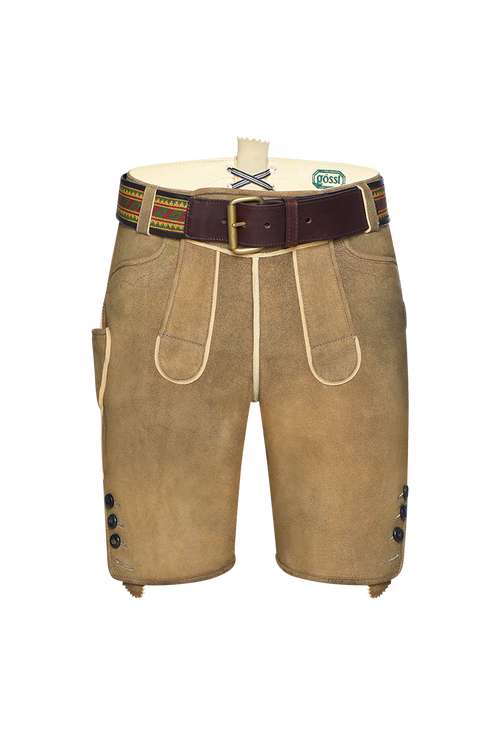
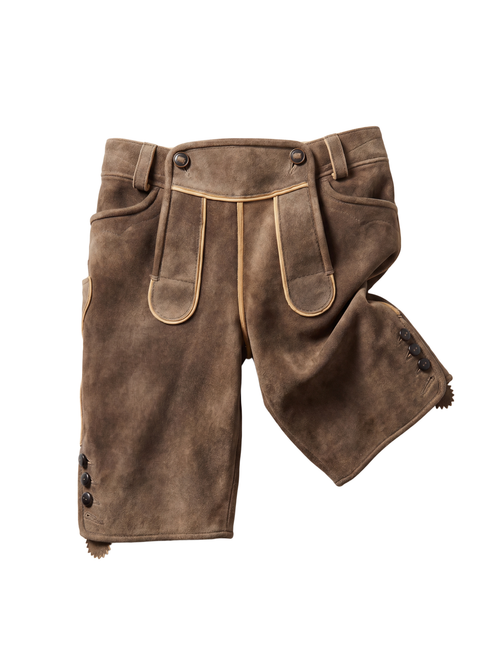
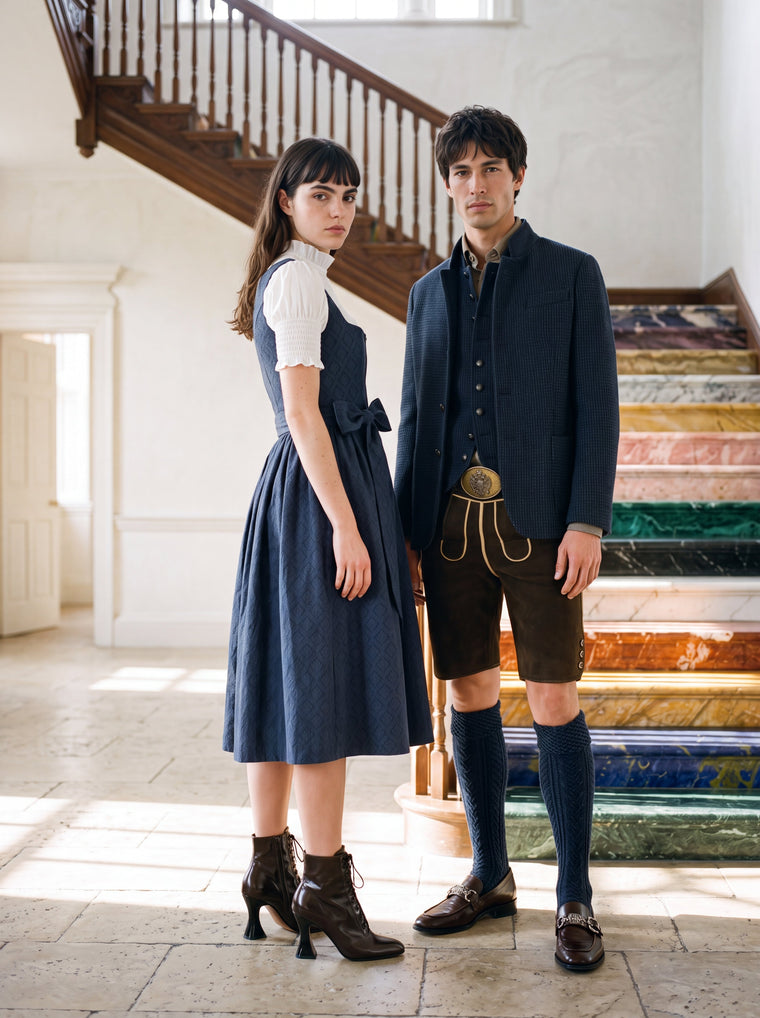
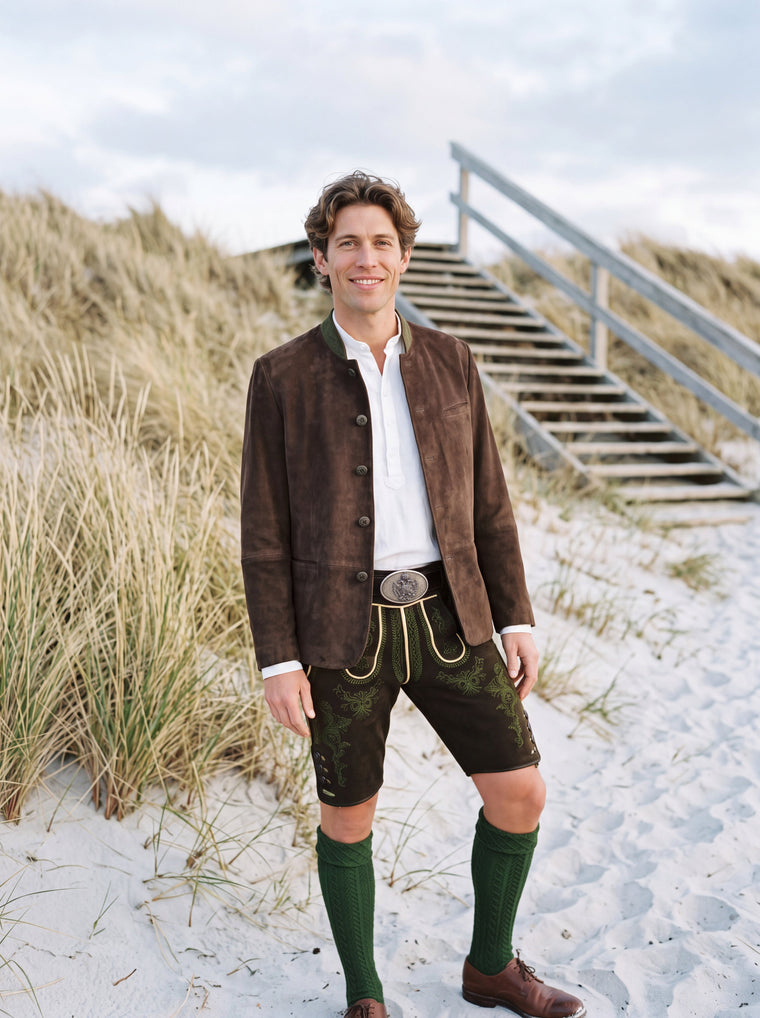
In the short form we recommend, the Lederhose ends about two fingers' width above the knee when standing. Besides the size, the type of leather, the thickness of the leather and the cut also determine how the trousers develop over time.
How tight should a new Lederhose be?
At the first fitting, a new Lederhose may feel noticeably tighter than a Lederhose that has already been worn in. What sits firmly at first gains width through wearing. If the Lederhose is bought generously from the outset, it can become too loose later on.
Pay particular attention to the fit at the seat and thighs. Here the leather should lie close to the body and should not already form a great deal of excess width at the fitting.
Tight, however, does not mean painful. The waistband must not restrict breathing, and even a new Lederhose must allow basic movements. Take your time at the fitting: walk a few steps and sit down.
Why should the Lederhose sit tightly at the thighs?
At the thighs a careful choice of size is especially important. There the leather is put under strain by walking, sitting and other movements, and gives as it is worn in.
Gössl therefore recommends a particularly close fit at the thighs to begin with. If the legs of the trousers already stand away noticeably at the time of purchase, the Lederhose can appear too wide after some time of wear.
For that reason, do not judge the trousers by the waistband alone. A size that fits there may be cut too generously at the legs. What matters is the interplay of waistband, seat and thighs.
How should the waistband of a Lederhose sit?
The waistband should sit securely and closely without cutting in uncomfortably. A new Lederhose should not be held in place by a tightly drawn belt alone.
At Gössl the Lederhose can be adjusted in width at the back. This possibility helps to match the fit at the waistband to the body. It does not, however, replace the choice of the right size: if the trousers are too wide at the seat and thighs, this cannot be fully compensated for by the adjustment at the back.
At the fitting, ask to be shown how the width adjustment on your model works.
What length should a Lederhose have?
For the short Lederhose ending just above the knee, we at Gössl recommend: the hem should lie about two fingers' width above the knee when standing upright.
This guideline is best judged on the body. Stand upright and let the legs of the trousers fall naturally. When you sit down they ride up – standing is therefore decisive for judging the length.
Other forms, such as knee-length Lederhosen, follow a different cut. The right length must therefore always suit the particular model.
Which button stays open on a Lederhose?
At Gössl we recommend leaving the lowest button at the side of the leg opening undone. That gives the opening a little play and is part of the way of wearing we prefer.
This refers to the row of buttons on the leg. The fastening at the waistband and on the front flap is closed as usual.
How much does a Lederhose stretch?
Leather gives with wear. How much depends, among other things, on the animal, the tanning, the thickness of the leather and the strain placed on it. A blanket figure in centimetres or clothing sizes would therefore be of little help.
Nor do the trousers develop evenly everywhere: places where more pull and movement arise are subject to greater strain. That is why a close fit at the first fitting is so important.
The Lederhose is meant to adapt to its wearer over time. Even so, do not buy it so tight that you depend on considerable stretching to be able to wear it at all.
Which leather does Gössl use?
For its deerskin Lederhosen, Gössl uses particularly thick, chamois-tanned deerskin. For us the thickness of the leather is part of the character of a good Lederhose and should be taken into account when judging the fit.
As an entry point, Gössl also offers Lederhosen made of chamois-tanned goatskin. Which version suits you depends on your ideas, the handle you want and your budget.
| Type of leather | Its place at Gössl | What it means at the fitting |
|---|---|---|
| Chamois-tanned deerskin | Particularly thick leather for our deerskin Lederhosen. | Choose tightly at first and check the fit especially at the seat and thighs. |
| Chamois-tanned goatskin | One way into the Gössl Lederhose. | Try on close to the body as well, and do not buy with generous additional width. |
| Roe deer leather | Not recommended by Gössl for this purpose, as in our experience it gains width quickly. | The tendency to stretch should be taken into account when choosing the leather. |
The type of leather alone does not determine the quality of a pair of trousers. Tanning, cutting, making and the right size are essential too.
Why does Gössl use only chamois-tanned leather?
For our Lederhosen only chamois-tanned leather comes into question – for deerskin as well as for goatskin. For Gössl this traditional tanning is inseparable from the quality of a good Lederhose.
In chamois tanning, fish oils, known as train oils, are worked into the hide. The result is a leather with a fine, open surface and a velvety soft handle. We tell more about the making on our page about the Gössl Lederhose.
Soft and pleasant to wear
Chamois-tanned leather is distinguished above all by its softness and its comfort in wear. These qualities are also emphasised by the Austrian UNESCO Commission in its description of chamois tanning.
At Gössl we combine this tanning with particularly thick deerskin. This is how that strong and at the same time supple handle arises which we value in a deerskin Lederhose.
A fit that develops with wearing
With frequent wear the deerskin becomes softer and more yielding. It increasingly follows your own movements and develops a personal fit. This development is also described in our story about the Gössl Lederhose.
That is why the first fitting is so important: the Lederhose should begin close to the body and adjust to you through wearing.
Handed-down knowledge as a mark of quality
Chamois tanning calls for experience and craft knowledge. In Austria this process is maintained by a few small family businesses and passed on to the next generation. Since 2025 chamois tanning has been part of the Austrian inventory of intangible cultural heritage. More about this craft
For Gössl this way of working is a deliberate decision. A Lederhose should be pleasant to wear, develop its own character and give pleasure over many years. Chamois tanning forms an essential part of our claim to quality.
Can a Lederhose be taken in?
A Gössl Lederhose that has become too wide can be taken in by us. Whether the leather has widened through frequent wear or your body measurements have changed: a proper alteration can give your familiar Lederhose the right fit again.
For smaller corrections at the waistband, the adjustment at the back is available. If that is not enough, or if the trousers are also too wide at the seat and thighs, please contact the Gössl store of your choice. At a fitting it will be assessed which alteration makes sense.
In this way a much-loved Lederhose remains a companion even when its fit has to be adjusted anew.
How do you recognise that a Lederhose is too large or too small?
With a new Lederhose, a deliberately firm initial fit must be distinguished from an unsuitable size.
| Observation at the fitting | What you should check |
|---|---|
| The legs of the trousers stand away noticeably at the thighs. | The trousers may be too wide, or the cut does not suit your proportions. |
| A great deal of excess leather remains at the seat. | A smaller size or a different cut may be more suitable. |
| The waistband sits a little too loosely, the rest of the trousers fits. | Check the adjustment at the back. |
| The waistband restricts breathing or causes pain. | The trousers are too tight. |
| Walking and sitting down are barely possible. | Size and cut should be assessed again. |
| The trousers sit firmly, but can be closed and allow movement. | That can be the right starting point for wearing them in. |
Personal advice helps in judging the necessary close fit correctly.
The Lederhose fitting: what to pay attention to
If possible, try the Lederhose on with the shirt or the Pfoad, the traditional shirt, that you intend to wear with it later. If the shirt is worn tucked into the trousers, it should sit there at the fitting as well.
Then check these six points:
- Waistband: it lies closely and securely without restricting breathing.
- Seat: the trousers sit close to the body and form no generous reserves of leather.
- Thighs: the leather lies particularly closely at first.
- Length: in the short form the hem lies about two fingers' width above the knee when standing.
- Leg opening: the lowest button at the side stays undone, as we recommend.
- Movement: walking and sitting down are possible without pain despite the firm fit.
Frequent questions about the fit of a Lederhose
Should you buy a Lederhose one size smaller?
Not as a rule. What matters is how the particular model sits on the body. At Gössl we recommend an initial fit that is as close as possible, because leather gives. The number on the size label is only a guide.
Does a Lederhose become wider with wear?
Yes, leather gives under strain. How much depends on the type of leather, the thickness, the tanning and the wearing. At the seat and thighs in particular there should therefore be no excessive width at the beginning.
May a new Lederhose be tight when sitting?
It may feel distinctly firm. Pain, restricted breathing or barely possible movement, however, are not a sign of a good fit. If in doubt, have the size and cut checked at a fitting.
What can be done if a Lederhose has become too wide?
With a Gössl Lederhose you can first regulate the width at the back of the waistband. If that is not enough, you can have the trousers taken in by us. Our staff will advise you on the appropriate alteration.
Is the Gössl goatskin Lederhose chamois-tanned as well?
Yes. Gössl uses only chamois-tanned leather for its Lederhosen. This applies to deerskin as well as to goatskin.
Why does Gössl not recommend roe deer leather?
In our experience roe deer leather gains width quickly. Gössl therefore relies on particularly thick, chamois-tanned deerskin or on chamois-tanned goatskin as an entry point.
Find your Lederhose at Gössl
A Lederhose develops its personal fit through wearing. The right starting size is decisive for that.
Discover our Lederhosen in the online shop or try on the model you have in mind in a Gössl store. Our staff will show you how closely the trousers should sit at first, how to regulate the width at the back and which alterations are possible later.
From masters for connoisseurs.