
Archive
How long has the Dirndl been worn?
The story of a garment that found its way from everyday farming life into society.
Today the Dirndl is one of the best-known garments of Austrian Tracht. Its history reaches far back and tells of a farming way of life, of social change and of a culture of dress that developed over generations. What is worn today on festive occasions as much as in everyday life had its origins in the simple clothing of the rural population.
From work clothes to the Dirndl
The forerunners of today's Dirndl are found in the work clothes of the women and farm maids of the Alpine region. Above all, their dresses had to be practical. Sturdy fabrics, simple cuts and a protective apron defined their appearance. In winter, denser, warming cloths were used, while lighter fabrics came into use in summer.

The apron served an entirely practical purpose. It protected the dress beneath it from dirt and wear and, when needed, could be cleaned or replaced more easily. Because fabric was precious, the textiles at hand were used for as long as possible, reworked and passed on. In this way, even worn-out bed and table linen could find a new purpose.
Unlike today's Dirndl, the early dress did not come with a white blouse as a matter of course. A white blouse would have been ill-suited to physical work on the land. Instead, simple shirts of hard-wearing fabrics were worn. At first, the upper part of the dress, too, served freedom of movement and practicality more than an accentuated silhouette.
The Dirndl wins over society
In the course of the 19th century, the appearance of rural clothing changed. Paintings and depictions of Tracht from the time already show dresses whose form comes close to today's Dirndl. The bodice was cut closer to the body, the waist more strongly emphasised and the skirt completed with an apron. The versions differed considerably by region, social standing and occasion.

The Sommerfrische, the summer retreat to the countryside, played a special part in spreading the Dirndl. With the expansion of the railways and the growing popularity of rural resorts, the well-to-do middle classes were drawn from the cities into the Alpine regions. In the process, the clothing of the rural population was rediscovered and adapted to the ideas of urban society.
Simple working fabrics gave way to finer cloths, practical dresses to carefully made garments. Dirndls were now also made of cotton, linen and silk. The cuts were refined, the Mieder (bodice) more closely fitted at the waist and the workmanship more elaborate. What had once served daily work increasingly became an expression of regional attachment and social belonging.
By the turn of the 20th century, the Dirndl had found a firm place far beyond the farming population. People wore it during the Sommerfrische, at social gatherings and on festive occasions. New interpretations kept emerging without its characteristic basic form being lost.
A Gwand with a history
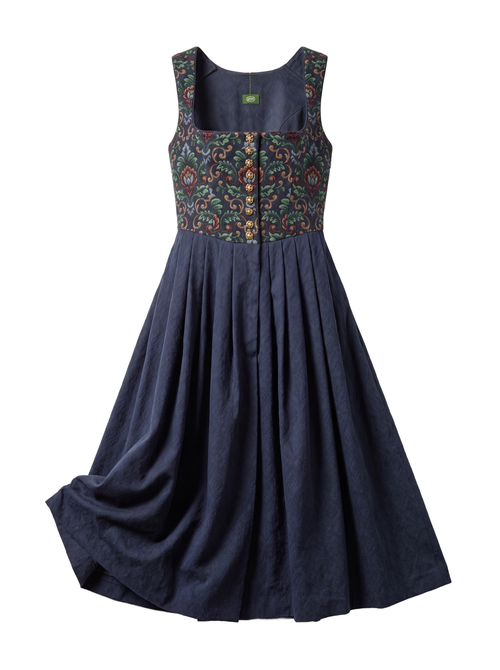
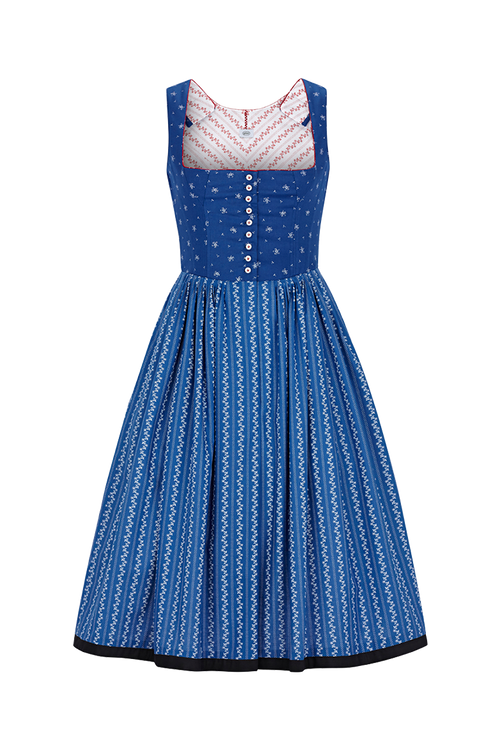
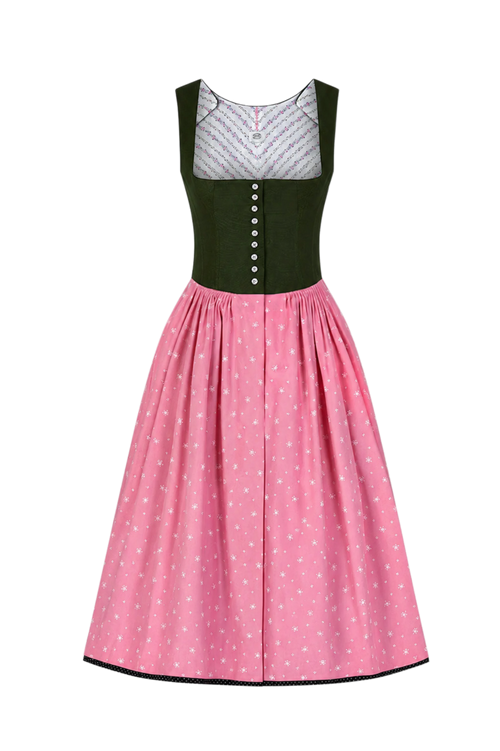
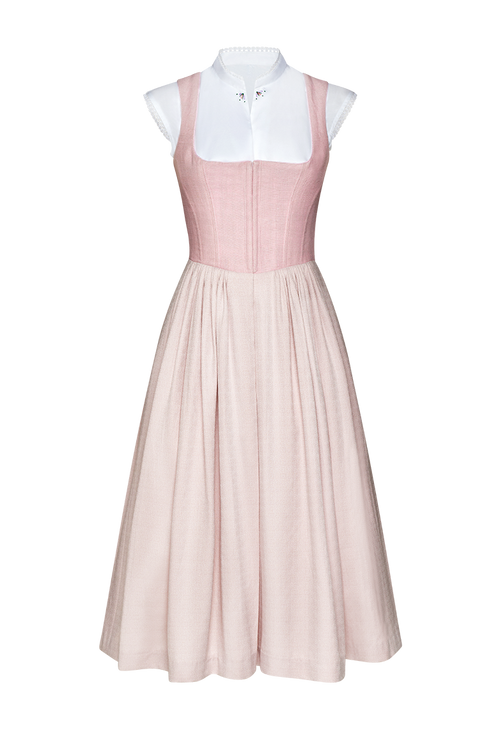
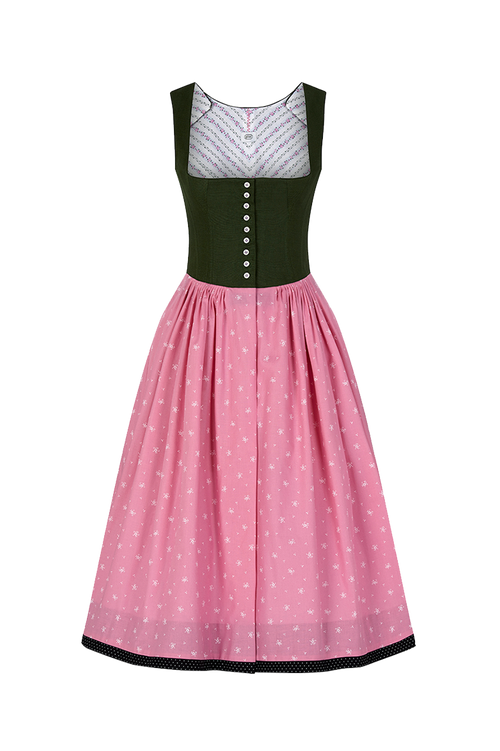
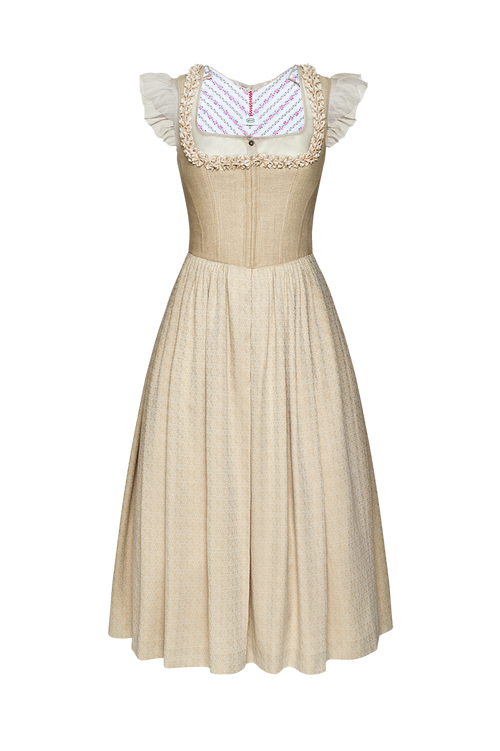
To this day, the Dirndl has remained true to its traditional form. A close-fitting bodice, a skirt sewn on at the waist and the apron worn over it define its appearance. Within this basic form, however, there is a remarkable variety of cuts, fabrics and handcrafted versions.
At Gössl, we see the Dirndl as a cultural heritage that has grown over time. Its forms, developed over generations, are not a constraint for us but the foundation of our work. We preserve traditional techniques of workmanship, develop historical cuts further and choose fabrics that meet the demands of a long-lasting Gwand.
And so the Dirndl remains what it has always been since it first emerged: a garment that changes with people and their times without losing its origins.