
Craft
How do you recognise a high-quality Dirndl?
A high-quality Dirndl can be recognised by its fabrics, careful construction and a well-considered fit. Natural fabrics, cleanly worked fastenings, a shaping bodice (Laib) and sufficient seam allowances are essential marks of quality. Added to these are the details of handwork, which often only become apparent on closer inspection.
At Gössl, it is also part of this that a Dirndl can be altered. It should give pleasure for many years and be able to adapt to its wearer. When buying, it is therefore worth looking not only in the mirror but also at the inside.
Which fabrics distinguish a high-quality Dirndl?
The fabric determines how a Dirndl falls, how it feels on the skin and on which occasions it can be worn. So check the composition: a beautiful surface alone says little about what a cloth is made of.
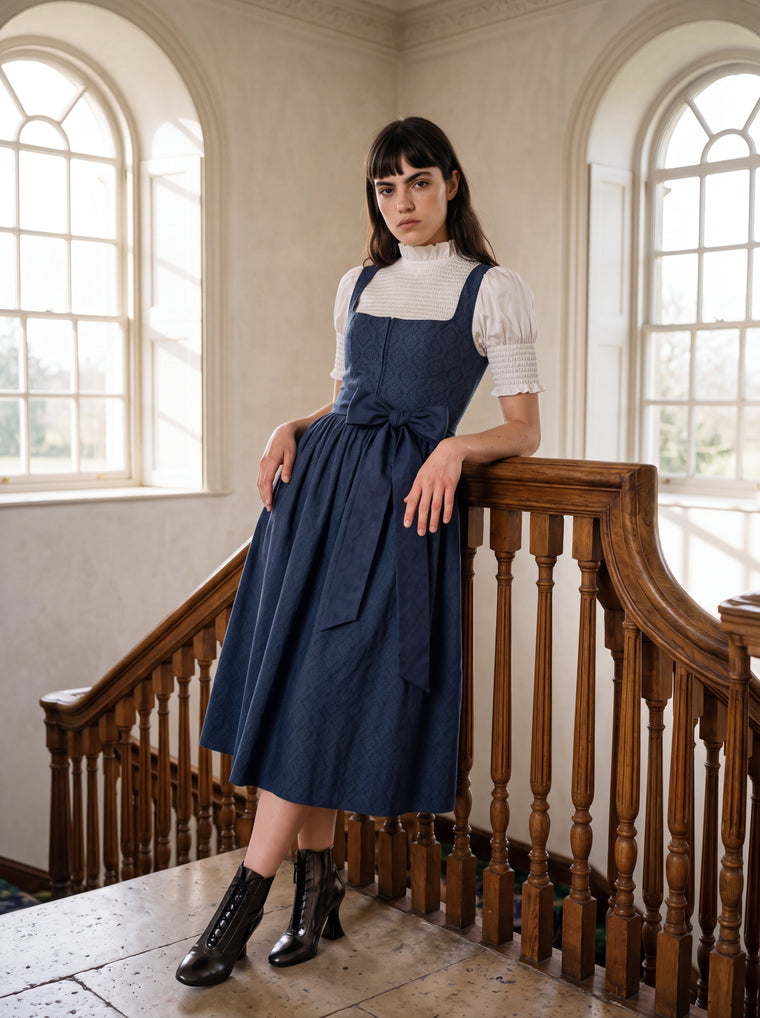
Gössl uses natural fabrics whenever they are available on the market in the quality required. One example is our jacquard of pure cotton, which is developed in our own workshops. Jacquard describes the way the pattern is formed in the weave, not the fibre composition. A jacquard can consist of various fibres or blends – the designation "jacquard" alone is therefore no proof of quality.
What matters is the interplay of fibre, weave and construction. The chosen fabric must suit the cut and the intended use.
Hooks or buttons: how is a Gössl Dirndl fastened?
A Gössl Dirndl is always fastened with hooks or with buttons. We never use zips on our Dirndls. This decision is part of our understanding of Tracht and of its craftsmanship.
When trying one on, make sure that the fastening is cleanly worked and that the edges lie evenly. Hooks and buttons should be securely attached and easy to close. If pronounced pulling creases appear, the fit needs to be checked as well.
With a buttoned Dirndl it is worth looking at both sides of the fastening: at the button itself and at the corresponding buttonhole.
What are high-quality Dirndl buttons made of?
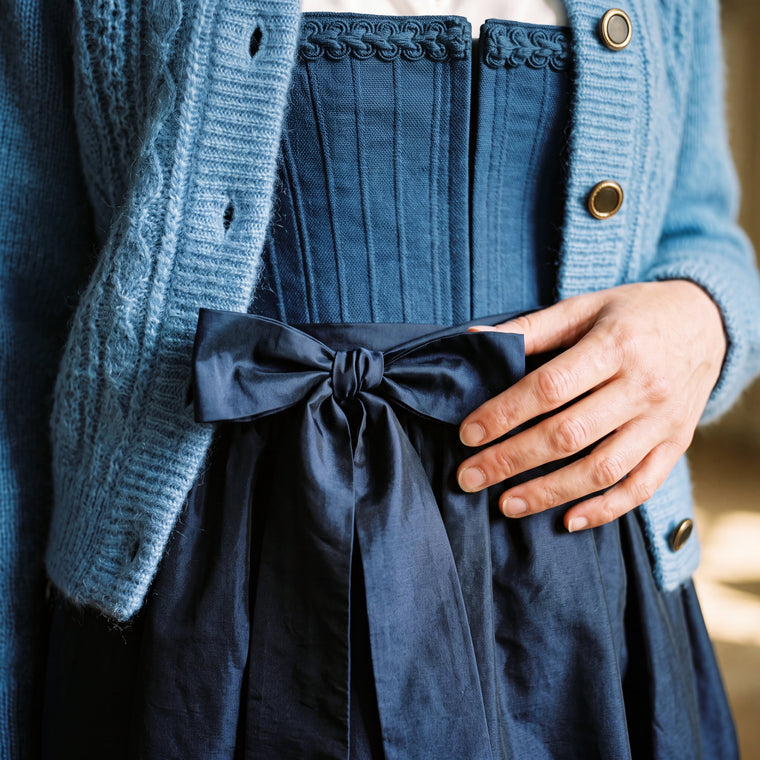
A button is a small detail with a great effect. Its surface, its lustre and its feel shape the character of a Dirndl.
Gössl uses only buttons of natural materials such as genuine mother-of-pearl and horn, as well as of glass – never of plastic. Mother-of-pearl brings a fine, lively shimmer, horn a natural marking. Glass, in turn, opens up other possibilities in colour and in the play of light.
Such differences can not only be seen but also felt. When looking at a Dirndl, do take a button between your fingers: these small components, too, show how carefully a Gwand has been made.
Why are piped buttonholes a mark of quality?
In a piped buttonhole, the opening is bound with narrow strips of fabric. This creates a precisely worked, three-dimensional border. Such construction calls for additional working steps and accuracy.
On buttoned Gössl Dirndls, piped buttonholes are part of the careful execution. They not only frame the button functionally but become a fine detail of design in themselves.
Look for even edges and clean workmanship. It is precisely in a row of buttonholes that the care taken becomes visible.
What role does the boning play?
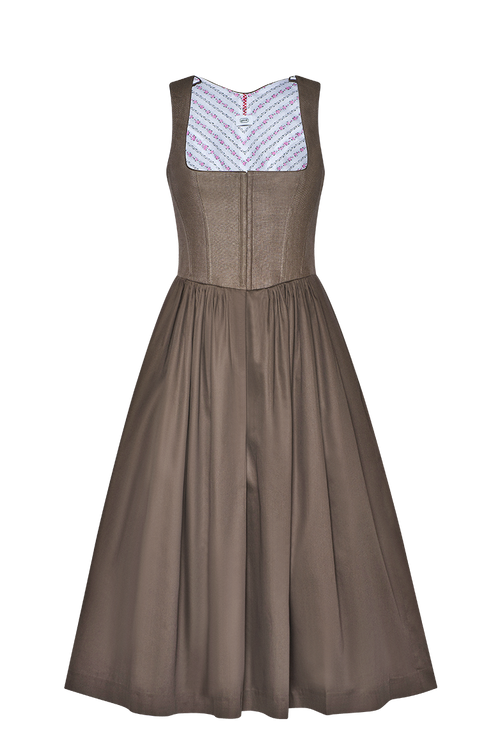
A high-quality Dirndl should keep its shape while being worn. For this, the inner construction of the bodice – that is, the upper part – is essential.
The boning worked into the Gössl Dirndl supports the bodice and helps it to hold its fit over years. It prevents the bodice from collapsing and creasing when you sit. The line of the upper part thus stays clear and flatters the figure.
This shaping work does not, however, replace the right size. The bodice should lie close to the body without constricting when you breathe or sit. Always check the fit in movement as well.
Why does a high-quality Dirndl need seam allowances?
A long-lasting Dirndl should be able to adapt to changing body measurements. For that it needs sufficient fabric reserves in the seams.
Every Gössl Dirndl has seam allowances with which a dressmaker or tailor can let it out by up to two standard sizes. It can therefore be made not only narrower but also wider.
The shoulders are designed to be alteration-friendly too: they can be raised or lowered to adjust the bodice to individual proportions. An additional hem allowance also makes it possible to lengthen the skirt within the given range.
These reserves are hardly visible on a Dirndl from the outside. For the pleasure it gives over many years, however, they can be decisive.
How do you recognise true handwork?
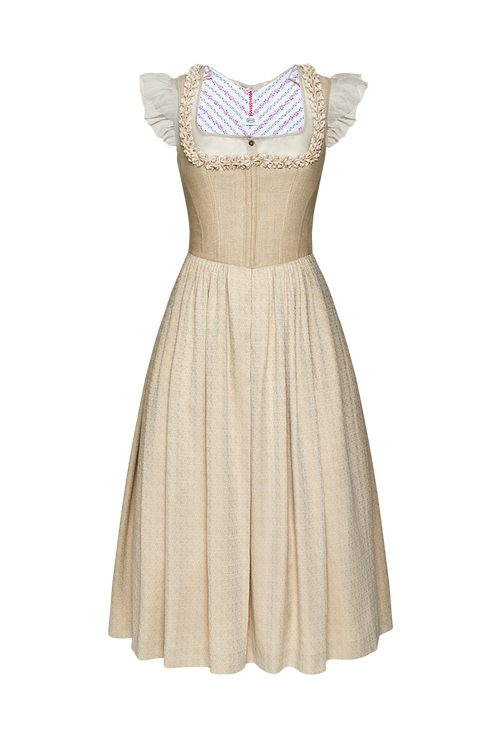
Handwork shows in the execution of individual details. These can include pleats carefully laid by hand, hand-worked frills or elaborate corded quilting. Which techniques are used depends, at Gössl, on the particular model.
In corded quilting, three-dimensional patterns are created by cords worked into the fabric and the quilting seams laid over them. Hand-laid pleats give the skirt its ordered fullness. Frills worked by hand set fine accents at the neckline or at other edges.
Every Gössl Dirndl is finished by hand with herringbone stitch and daisy. These final pieces of work are among the details in which our standard of craftsmanship shows.
Have such features explained to you when you are being advised. Anyone who knows how a detail comes about can better recognise and judge the work behind it.
What does the inside reveal about the quality?
When trying a Dirndl on, do turn it inside out once or ask to be shown its inner construction. Features become visible here that easily remain hidden in a product photograph.
Are the seams cleanly executed? Are the fastenings properly attached? Are there recognisable fabric reserves for later alterations? How are the edges finished?
At Gössl, the inner shaping, the seam allowances and the finishing by hand are all part of the whole. Care should run through the entire Dirndl – including where no one sees it while it is worn.
The most important marks of quality at a glance
| Feature | What to look for | At Gössl |
|---|---|---|
| Fabrics | Clear details of the composition and a cloth that suits the model. | Natural fabrics whenever possible; cotton jacquard of pure cotton, developed in our own workshops. |
| Fastening | Cleanly worked edges and securely attached fastenings. | Hooks or buttons only, no zips. |
| Buttons | Fine materials and careful attachment. | Genuine mother-of-pearl, horn or glass; no plastic. |
| Buttonholes | Precisely and evenly worked bindings. | Piped buttonholes on buttoned Dirndls. |
| Shaping | A bodice that sits well and keeps its shape. | Boning worked into the bodice. |
| Possibilities for alteration | Fabric reserves and accessible construction. | Letting out by up to two standard sizes, adjustable shoulders and an additional hem allowance. |
| Handwork | Comprehensible craft techniques on the particular model. | Depending on the model, corded quilting, hand-laid pleats and hand-worked frills. |
| Finishing | Careful edges on the inside as well. | Every Dirndl is finished by hand with herringbone stitch and daisy. |
Why does a high-quality Dirndl cost more?
The price of a Dirndl arises, among other things, from the fabrics used, the development of the cloth and the cut, and the effort of the making.
A piped buttonhole calls for additional working steps. Hand-worked frills and corded quilting need time and practised hands. The inner shaping and the fabric reserves for later alterations also add to the effort.
A high price alone is nevertheless no proof of quality. Ask to have it explained which fabrics are used, which work is genuinely done by hand and which alterations are possible. In this way it becomes clear what goes into a Dirndl.
Frequent questions about the quality of a Dirndl
Are all jacquard Dirndls made of cotton?
No. Jacquard describes the forming of the pattern in the weaving and in itself says nothing about the fibres used. For its cotton jacquard Dirndls, Gössl uses pure cotton jacquard, which is developed in our own workshops.
Are there Gössl Dirndls with a zip?
No. Gössl Dirndls are always fastened with hooks or buttons.
Can a high-quality Dirndl be let out later?
For that, sufficient seam allowances have to be present. On every Gössl Dirndl these allow it to be let out by up to two standard sizes. The specific alteration is assessed at a fitting.
Is every Gössl Dirndl decorated with the same elaborateness?
The design and the handwork techniques used differ from model to model. A plain Dirndl can be worked just as carefully as a richly decorated one. Every Gössl Dirndl is finished by hand with herringbone stitch and daisy.
How long does a high-quality Dirndl last?
That depends on how it is worn, cared for and stored. Careful construction, a stable shaping and the possibility of alterations create good conditions for a Dirndl to give pleasure over many years.
Discover the quality for yourself
Many features of a high-quality Dirndl only reveal themselves close up: the shimmer of a mother-of-pearl button, the binding of a buttonhole or the fine structure of corded quilting.
Discover the Gössl Dirndls in the online shop or have the particular features of the model you have in mind shown to you in one of our stores. We gladly take time for the details – and for a fit that suits you.
From those who can, for those who know.